

· Updated

Medically reviewed by the clinical team at The Farm Rehab. Last updated: October 2026.
Wet brain is the common name for Wernicke-Korsakoff syndrome, a serious brain disorder caused by a severe lack of thiamine (vitamin B1) that is most often linked to long-term heavy drinking. It develops in two stages: a short, acute phase called Wernicke encephalopathy, which is a medical emergency, and a longer phase called Korsakoff syndrome, which mainly damages memory. Caught early and treated quickly with thiamine, the first stage can often be partly reversed. Left untreated, the damage can become permanent.
This guide explains what wet brain is, why alcohol causes it, the two stages and their symptoms, whether it can be reversed, and how it is treated and prevented in Ontario.
What is wet brain?
Wet brain is a non-medical nickname for Wernicke-Korsakoff syndrome, a type of brain damage caused by a lack of thiamine. The name has nothing to do with the brain being literally wet. It is old slang that stuck, and many clinicians avoid it because it can sound dismissive of a person living with a real medical condition.
Doctors usually describe the condition as two linked stages rather than one illness. Wernicke encephalopathy comes first and happens suddenly. Korsakoff syndrome tends to follow if the first stage is missed or goes untreated. Because the two overlap so often, they are grouped together under one name. The Centre for Addiction and Mental Health (CAMH) notes that heavy alcohol use affects nearly every organ in the body, and the brain is among the most vulnerable.
What causes wet brain?
Wet brain is caused by a shortage of thiamine, a vitamin the brain needs to turn glucose into energy. Without enough of it, cells in key areas of the brain begin to fail. Alcohol is the most common reason this happens in Canada, and it contributes in several ways at once.
Heavy drinking reduces how much thiamine the gut can absorb, lowers the amount the liver can store, and interferes with the body turning it into its active form. People who drink heavily also tend to eat poorly and may vomit often, which drains reserves further. The body holds only a small store of thiamine, enough for a few weeks, so a deficiency can build up faster than many people expect.
Alcohol is not the only cause. The same deficiency can appear with severe malnutrition, eating disorders, prolonged vomiting, or after some types of weight-loss surgery. In the context of addiction treatment, though, long-term alcohol use is the pattern clinicians see most.
Risk climbs with the amount and duration of drinking, but there is no safe threshold that guarantees protection. People who drink daily, skip meals, or have been drinking heavily for years face the highest risk. A bout of illness, a hospital stay, or a sudden drop in eating can tip a long-standing deficiency into a crisis, which is part of why wet brain sometimes surfaces at a point that looks unrelated to drinking.
What are the two stages of wet brain?
Wet brain has two stages: Wernicke encephalopathy, the acute emergency phase, and Korsakoff syndrome, the chronic memory phase. Wernicke comes on quickly and can be treated. Korsakoff develops more slowly and often leaves lasting damage. The table below sets them side by side.
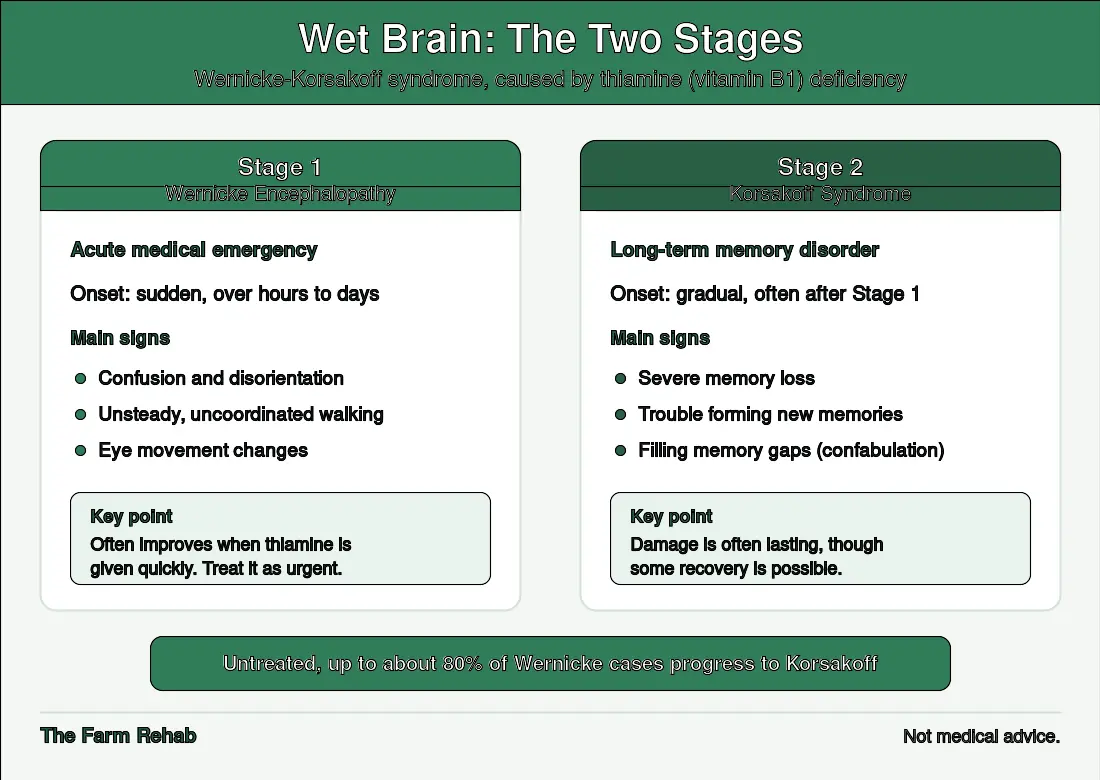
| Stage 1: Wernicke encephalopathy | Stage 2: Korsakoff syndrome | |
|---|---|---|
| Onset | Sudden, over hours to days | Gradual, often after Wernicke |
| Nature | Acute medical emergency | Long-term memory disorder |
| Main signs | Confusion, unsteady walking, eye movement changes | Severe memory loss, trouble forming new memories, filling gaps in memory |
| Treatment response | Often improves with rapid thiamine | Damage is often lasting; some recovery possible |
These stages sit on one spectrum. Among people who survive Wernicke encephalopathy without proper treatment, a large share, by some clinical estimates up to about 80 percent, go on to develop Korsakoff syndrome. That is why the acute phase is treated as an emergency.
What are the symptoms of wet brain?
The symptoms depend on the stage. Wernicke encephalopathy classically shows three signs: confusion and disorientation, loss of muscle coordination that makes walking unsteady, and changes in eye movement such as rapid flicking or drooping. In practice only a minority of people show all three at once, which is one reason the condition is so often missed.
Korsakoff syndrome looks different. The clearest sign is severe memory trouble, especially difficulty forming new memories, so a person may hold a conversation and forget it minutes later. Older memories can also fade. Some people fill the gaps with invented details without meaning to deceive, a symptom clinicians call confabulation. Apathy, trouble with planning, and personality changes can appear as well.

Because these signs can be mistaken for intoxication, withdrawal, or ordinary forgetfulness, wet brain is underdiagnosed. Anyone who drinks heavily and becomes suddenly confused, unsteady, or disoriented should be treated as a possible medical emergency.
Is wet brain reversible?
It depends on the stage and on how fast treatment starts. Wernicke encephalopathy can often be partly or largely reversed if thiamine is given quickly, before the damage sets. This is why speed matters so much in the acute phase. Every day without treatment raises the risk of permanent harm.
Korsakoff syndrome is harder. For many people the memory damage is lasting, though outcomes vary widely. Some regain a meaningful amount of function with sustained abstinence, good nutrition, and thiamine over months, some improve partly, and some see little change. No clinic can promise a specific result, and recovery is rarely all or nothing. What does hold true is that continued drinking makes the outlook worse, while stopping gives the brain its best chance to stabilise and, in some cases, improve.
How is wet brain treated and prevented?
Treatment starts with urgent thiamine replacement, often given by injection or through a vein at first because the gut absorbs it poorly during heavy drinking, followed by oral doses. Stopping alcohol is essential, and because alcohol withdrawal can itself be dangerous, this is safest under medical detox rather than alone at home. Good nutrition, hydration, and ongoing care support the brain as it recovers.
From there, addressing the drinking itself is what protects the brain over the long term. Structured alcohol addiction treatment combines medical support with counselling and relapse prevention so the underlying pattern does not return. For someone already living with memory damage, recovery care may also include help with daily routines, memory aids, and family support, since a person with Korsakoff syndrome often needs a steadier structure than they did before. Prevention follows the same logic: lowering alcohol use in line with Canada’s guidance on alcohol and health, eating well, and taking thiamine where a clinician recommends it. Recognising the early warning signs of alcohol addiction and acting on them is the most reliable way to avoid wet brain in the first place.
If you or someone you care about is drinking in a way that worries you, our team at The Farm Rehab can talk through options and next steps. Reach out to our admissions team whenever you are ready.
Frequently asked questions
Is wet brain the same as dementia?
Not exactly. Wet brain, or Korsakoff syndrome, is sometimes called alcohol-related dementia, and it does cause lasting memory problems. The key difference is cause and course. It comes from a thiamine deficiency tied to alcohol rather than from the diseases behind Alzheimer type dementia, and unlike most dementias it can stabilise, and sometimes partly improve, once drinking stops and thiamine is restored.
How long does it take to develop wet brain?
There is no fixed timeline. Because the body stores only a few weeks of thiamine, a severe deficiency can develop over weeks of heavy drinking with poor eating, while in other people the damage builds quietly over years. Wernicke encephalopathy can appear suddenly even in someone who seemed stable, which is why new confusion in a person who drinks heavily should never be ignored.
Can you recover from Korsakoff syndrome?
Some people do recover a meaningful degree of function, though many are left with lasting memory difficulties. Recovery depends on how early the condition is caught, whether the person stops drinking, and whether thiamine and nutrition are restored and maintained. Outcomes vary from person to person, so no one can guarantee a particular result, but sustained abstinence clearly gives the brain its best chance.
Getting help in Ontario
Wet brain is serious, but the drinking that drives it is treatable, and reaching out early makes a real difference. The Farm Rehab provides medically supported detox and inpatient alcohol treatment in Ontario, with care focused on the whole person and a steady path back to health.
This article is for general information and is not medical advice. If you have concerns about wet brain, alcohol use, or your health, speak with a qualified healthcare provider.
If you need help now: ConnexOntario offers free, confidential addiction support 24/7 at 1-866-531-2600. For mental health crisis or thoughts of suicide, call or text 9-8-8 (Suicide Crisis Helpline). In a medical emergency, call 9-1-1.

